
Julia Smith has always been driven to help others. Growing up, she imagined herself as a veterinarian or doctor who could make a difference through science. But when she got to college, her path took an unexpected turn. The courses that resonated most weren’t in the labs, but in the classroom discussions of gender studies and ecofiction.
Now a senior double-majoring in gender studies and sociology in the McCausland College of Arts and Sciences, Smith has found both her purpose and her people. What began with an academic interest in the humanities has become a career and a calling to support and advocate for others.
That calling deepened when the WGST 499 community service course led her to an internship with Columbia’s Harriet Hancock Center, a community hub supporting LGBTQ+ individuals and allies. There, Smith found more than professional experience. She found belonging.
“As a young queer person, I did not feel like there were many people within Columbia that cared and wanted to fight for our futures,” Smith said. “However, there is a vibrant and passionate community that is pushing to protect our lives and autonomy.”
Through her work at the Hancock center, Smith attended speaking sessions at the State House, experiences that sparked her passion for advocacy and public policy. The work also reframed how she saw her roots.
“Going to USC allowed me to see South Carolina and my southerness in a new light,” she said. “It taught me that I can make and find community with amazing people anywhere.”
Smith now plans to pursue a graduate degree in public policy, continuing the advocacy work that began at the Harriet Hancock Center. In the meantime, she’s been hired as an advocacy coordinator, helping others find the same sense of connection and purpose she discovered there.
In a chat with us, Smith shared more about the internship that jumpstarted her career and what it means to be a community advocate.
Q: What is your day-to-day role as advocacy coordinator at the Harriet Hancock Center?
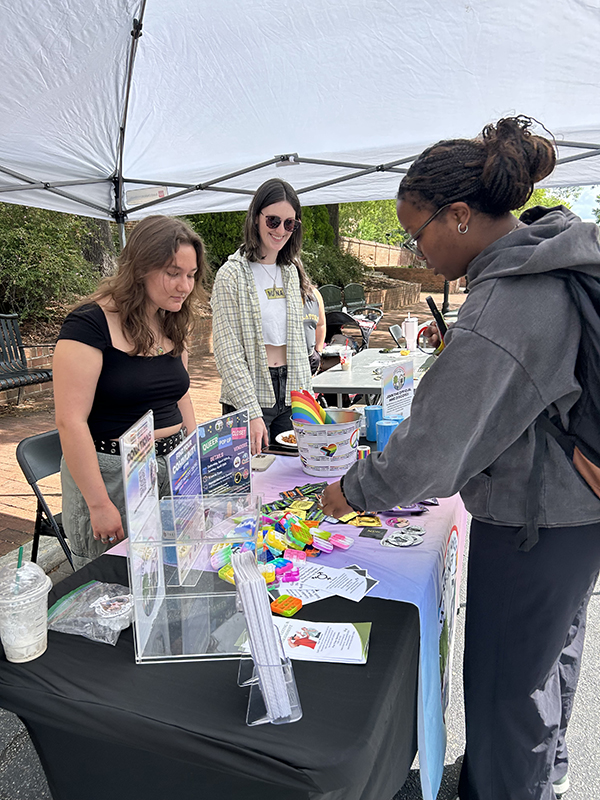
It varies a ton depending on if the legislative session is occurring. During this time, the job is very rapid and involves attending multiple hearings back-to-back and writing action alerts to update others. Otherwise, I am usually planning events with our executive director, Cristina Picozzi, and brainstorming the best ways to interact and get our local community involved in advocacy. To me, advocacy is about building community and providing accessible education and resources. This goes hand-in-hand with my personal passions and future career goals.
Q: You undertook a community service internship through the Department of Women’s and Gender Studies. What did you enjoy most about it?
As a student, it can feel daunting to reach out to organizations and get field experience. The WGST 499 course requires you to do that with a bit of guidance. Professor Dawn Campbell structured the course with a lot of leniency and ability for you to define what this experience means to you. It's not rooted in coursework or busy assignments. It instead acts as a support system for what may be your first internship experience.
During the class, we’d give updates and talk about our experiences. This was my favorite part as it allowed me to get to know my peers and it was cool to hear others’ engaging experiences and interests. This showed me how broad our major truly is.
Q: Talk a bit about your internship at the Harriet Hancock Center. What were your duties?
My main duties involved writing out what advocacy meant to me and how we would enact that within the community. My main goal at the center was planning advocacy initiatives and programming and figuring out what our legislative concerns are.
Q: What was the most valuable lesson you learned from your internship?
I’m a pretty anxious person and I was once very scared about interacting with the community around me. This internship immersed me. I learned that, as funny as it sounds, people aren’t scary, and so many want to help you. I also learned that mistakes are going to happen, and that’s okay.
Q: What kind of impact do you hope to make with your work?
As I continue with my education in hopes of gaining a master’s in public policy, I want to make sure that no matter where I end up geographically or within my career, that I push for creating safe spaces, accessible educational opportunities and striving to implement efforts that create a more equitable and sustainable future.